THE MAKING, SHAPING AND TREATING OF STEEL

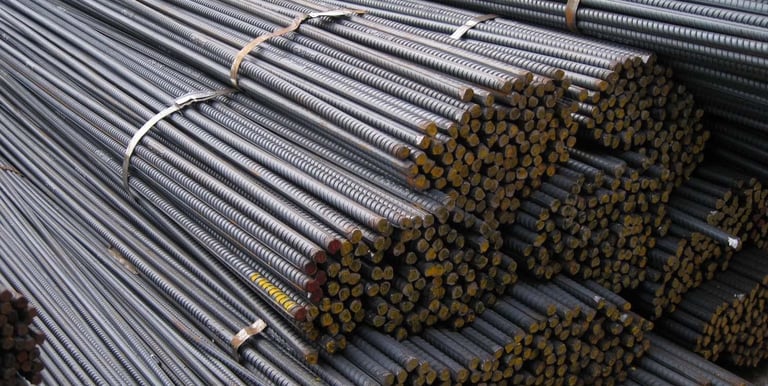
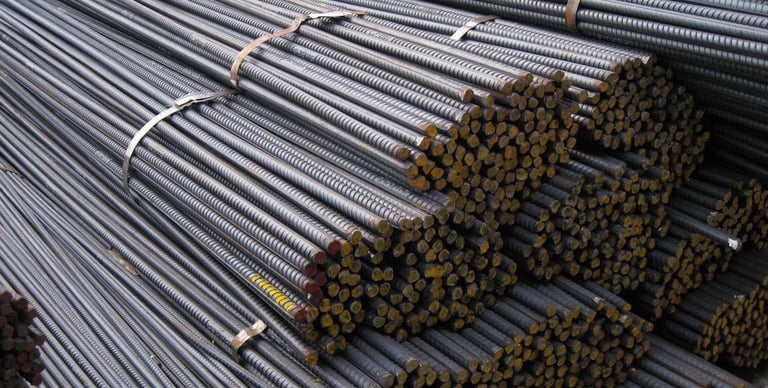
Corrosion Resistant Alloy Steel Rebar
High-quality Fe 500CRS and Fe 550CRS grades for durable construction and enhanced longevity in structures.
Maintaining Strength, Ductility, and Toughness over Long Service Life
AISCO 500CRS and AISCO 550CRS Corrosion-Resistant Alloy TMT Deformed Steel Rebars
Corrosion-Resistant Alloy (CRA) TMT deformed rebars are specially engineered reinforcement steels designed to withstand aggressive environments where conventional rebars are prone to rust and deterioration. By combining low carbon content, thermo-mechanical treatment, and special corrosion-resistant alloying elements, these rebars offer superior durability, ductility, and structural safety.
Standards Compliance
Indian Standards: IS 1786:2008 (High strength deformed steel bars for concrete reinforcement).
Seismic Detailing: IS 13920:2016 (Ductile detailing of RC structures subjected to seismic forces).
International Standards:
ASTM A615/A615M (Grade 80) – USA.
DIN 488 (BST 500 M) – Germany/Europe.
BS 4449:1997 (GR 460 B) – UK.
Chemical Composition (Typical Range)
Carbon (C): 0.15 - 0.27% (for ductility & weldability).
Manganese (Mn): 0.80 – 1.60% (strength & toughness).
Chromium (Cr): 0.20 – 0.60% (corrosion resistance).
Copper (Cu): 0.20 – 0.35% (chloride-induced corrosion resistance).
Phosphorus (P) & Sulphur (S): ≤ 0.04% (controlled for improved toughness).
Metallurgical Features
Thermo-Mechanical Treatment (TMT):
Quenching + self-tempering → Hard martensitic surface + ductile ferrite-pearlite core.
Alloy Protection:
Chromium and Copper improve resistance against chloride, carbonation, and industrial pollution.
Low Carbon Design:
Ensures toughness, ductility, and superior weldability.
Mechanical Properties
Yield Strength: 500 – 600 MPa (Fe 500/Fe 550 grades).
Ultimate Tensile Strength (UTS): ≥ 1.08 × Yield Strength.
Elongation (Uniform): ≥ 14.5% (as per IS 13920:2016).
Fatigue Resistance: Excellent under cyclic loading.
Key Advantages
✅ Corrosion Resistance – Enhanced service life in coastal, marine, and industrial environments.
✅ Seismic Safety – High ductility & elongation ensures energy absorption during earthquakes.
✅ Low Maintenance – Reduces lifecycle cost of structures.
✅ Weldable & Bendable – No preheating required during fabrication.
✅ High Bond Strength – Deformed ribs ensure superior grip with concrete.
Applications
Coastal and marine structures (ports, jetties, bridges).
Industrial plants (chemical, fertilizer, power).
Urban infrastructure (flyovers, high-rise buildings, metros).
Structures in chloride & sulphate-rich soils.
AISCO 500CRS and AISCO 550 Corrosion-Resistant Alloy TMT Rebars combine the strength and ductility of low-carbon TMT rebars with special alloying for corrosion resistance, ensuring longer service life, reduced maintenance costs, and superior safety in aggressive environments.
Corrosion-Resistant Alloy Steel Deformed Bars for Concrete Reinforcement
Code: HSN 72142090, NIC 24105
Indian Standards: IS 1786:2008 (Grade Fe 550) = American Standards: ASTM A706/A706M (Grade 80) = Euro Standards DIN 488 (BST 500 M) and = British Standards: BS4449:1997 (GR 460 B)
Benefits of Corrosion-Resistant Alloy (CRA) elements in steel rebars used for construction:
✅ 1. Significantly Higher Corrosion Resistance
Alloying elements such as Chromium (Cr), Copper (Cu), Nickel (Ni), Molybdenum (Mo) form stable oxide layers on the steel surface.
These protect the rebar from chloride-induced corrosion, especially in:
Coastal areas
High groundwater salt concentration (>300 ppm)
Water treatment plants
Bridges, flyovers & marine structures
✅ 2. Longer Structural Life
Corrosion-resistant rebars prolong the service life of concrete structures by preventing:
Rust expansion
Cracking of concrete
Spalling (chunks of concrete breaking off)
This reduces the need for frequent repairs over the structure’s lifespan.
✅ 3. Lower Life-Cycle Cost
Even though CRA rebars may cost more upfront, they offer:
Reduced maintenance
Extended durability
Fewer repairs
Overall, the life-cycle cost becomes much lower for long-term infrastructure.
✅ 4. Improved Bond Strength With Concrete
Alloy elements help maintain:
Rib integrity
Surface condition
No rust-induced weakening of bond
Meaning the rebar maintains better load transfer with concrete for decades.
✅ 5. Better Performance Under Harsh Conditions
CRA rebars perform well in:
Marine and coastal environments
Industrial areas with chemical exposure
Sewage & desalination plants
High humidity zones
They resist pitting, chloride penetration, and stress corrosion cracking.
✅ 6. Enhanced Strength & Toughness
Some alloying elements improve mechanical properties:
Cr, Mo → Higher strength & hardenability
Ni → Better toughness at low temperatures
Cu → Increases corrosion resistance without affecting ductility
Thus, the rebar remains strong and ductile even in aggressive environments.
✅ 7. Protects Against Microstructural Deterioration
Corrosion-resistant alloys prevent:
Loss of cross-sectional area
Brittleness due to rust buildup
Weakening of microstructure over time
This ensures greater structural reliability.
Corrosion-resistant alloy elements make steel rebars more durable, reliable, and cost-effective—especially for structures exposed to saltwater, chemicals, or moisture.


Comparison Table (Normal TMT vs. Corrosion-Resistant TMT)
Application of CRR / Low-Alloy Corrosion-Resistant TMT Bars in High-Rise Building
Basements of high-rise buildings are continuously exposed to moisture, groundwater chlorides/sulphates, and low-oxygen environments, making them highly corrosion-prone.
🔶 Why CRR Rebars are Used in Basements
High Groundwater Chlorides (>300 ppm)
Cu–Cr–Ni–Mo alloying significantly slows chloride penetration and reduces pitting corrosion.
Constant Dampness / Water Seepage
Basements remain wet or humid, causing rapid rusting in normal rebars.
Alloy rebars maintain passivation even under intermittent wet–dry cycles.
Protection Against Sulphates & Chemical Impurities
Urban groundwater often contains aggressive ions. Mo and Cr enhance chemical resistance.
Prevents Concrete Spalling in Underground Areas
Corrosion causes cracking and detachment of covering concrete.
CRR rebars reduce rust expansion, thus improving long-term durability.
🔶 Typical Basement Applications
Raft foundation
Pile & pile caps
Shear walls
Retaining walls
Lift wells and core walls
Underground parking structures
Water sumps, STP/UGT rooms
🔶 Key Benefit for High-Rise Towers
High-rise buildings demand 100+ year service life. CRR bars reduce long-term structural maintenance and prevent early deterioration of foundation systems.
Application of CRR / Low-Alloy TMT Bars in Air-Polluted Urban Areas
Air pollution accelerates corrosion even in above-ground structures—especially in metro cities with high SO₂, NOₓ, CO₂ and particulate contaminants.
🔶 Why CRR Rebars Improve Durability in Polluted Cities
Protection Against Carbonation
Polluted air increases CO₂ concentration → faster carbonation → reduced concrete alkalinity.
Alloying elements help keep the steel surface passivated even if pH drops.
Resistance to Acidic Rain
SO₂ & NOₓ emissions cause acid rain which increases chloride mobility in concrete.
Cr and Mo greatly improve resistance to such acidic environments.
Reduced Corrosion in High-Humidity Cities
Coastal metros (Mumbai, Chennai, Kolkata) and industrial zones have moist, contaminated air.
Copper alloying decreases uniform corrosion and atmospheric corrosion rate.
Better Performance in Areas Near Traffic Corridors
Dense traffic emissions contain chlorides and sulphur compounds.
Ni and Cr improve film stability on steel, slowing the corrosion attack.
🔶 Application Zones in Urban Buildings
Podiums & parking decks
Lower floors and external beams/columns
Boundary walls, podium slabs
Utility areas exposed to pollution
Metro rail stations, malls, commercial towers
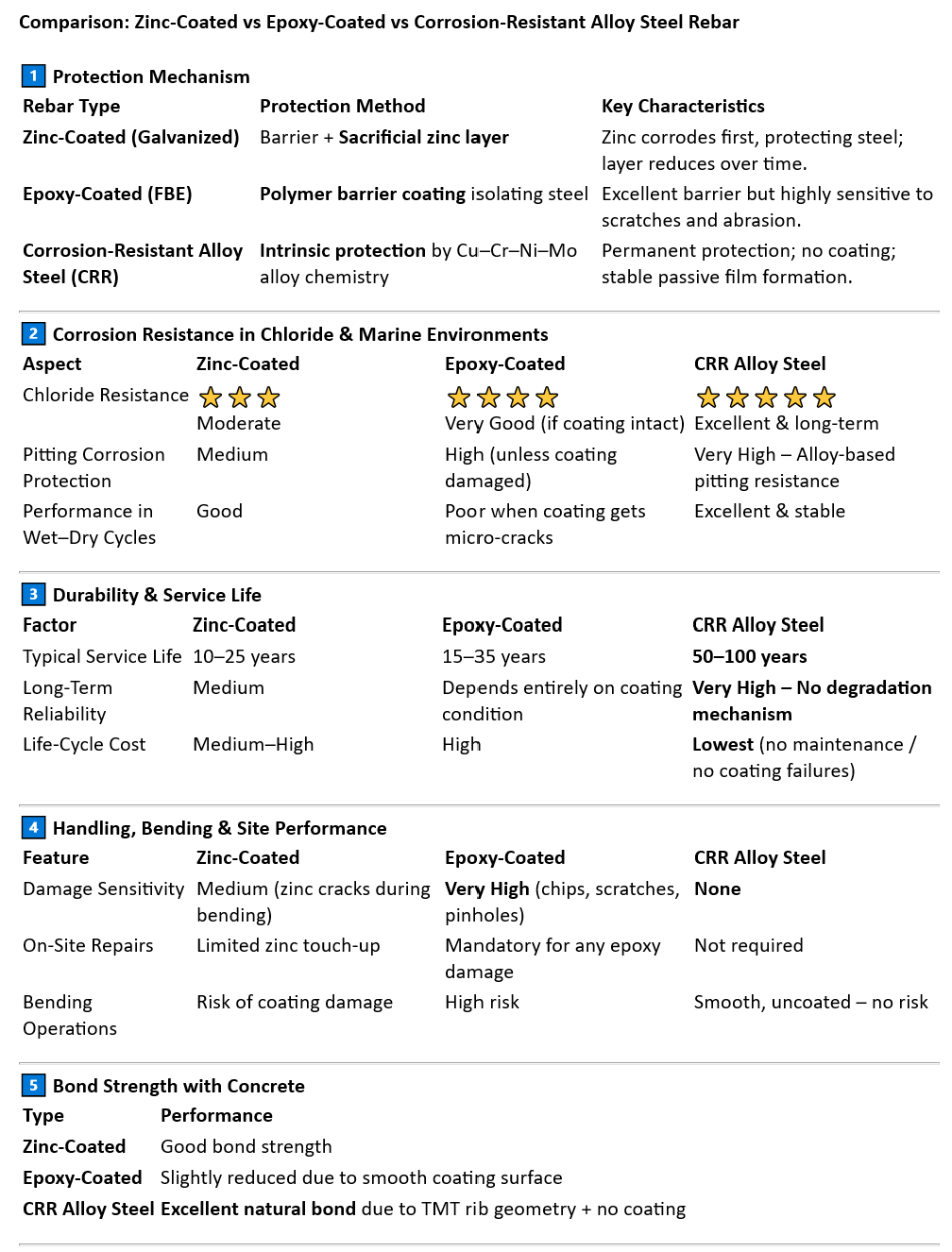
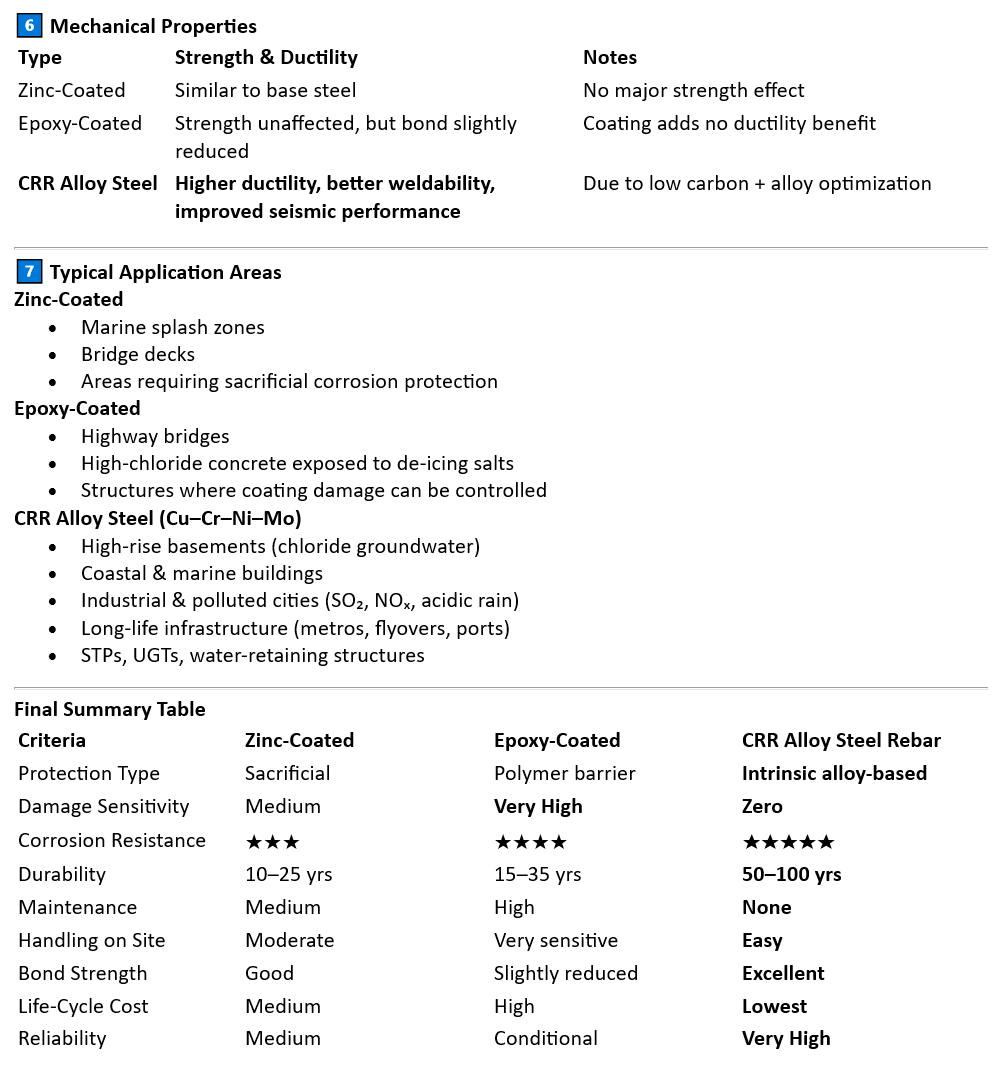
Benefits of CRR / Low-Alloy Corrosion-Resistant TMT Bars Compared to Carbon Steel Rebar
1. Significantly Higher Corrosion Resistance
CRR / Low-Alloy Rebar
Alloy elements (Cu, Cr, Ni, Mo) form a stable passive film on steel surface.
Slows rust formation, even in chloride, sulphate, and acidic environments.
Reduces corrosion rate by 40–70% compared to carbon-only steel.
Carbon Steel Rebar
Passivity breaks quickly in presence of chloride ions.
High risk of pitting corrosion → rapid rust growth → structural cracks.
2. Better Performance in Chloride & Saline Environments
CRR / Alloy Rebar
Ideal where groundwater chloride is >300 ppm or in coastal zones.
Cu + Ni improve chloride pitting resistance.
Mo strengthens resistance against corrosive salts in wet-dry cycles.
Carbon Steel Rebar
Fails early in chlorides — concrete spalling begins sooner.
Requires coatings or frequent repairs to maintain durability.
3. Higher Durability & Service Life
CRR / Alloy Rebar
Extends structure life by 20–30 years or more.
Minimizes premature cracking of beams, columns, and slabs.
Lowers life-cycle maintenance cost.
Carbon Steel Rebar
Accelerated rust → concrete cracking → reduced service life.
Higher long-term maintenance expenses.
4. Better Resistance to Industrial & Polluted Atmospheres
CRR / Alloy Rebar
Cr & Mo protect against sulphates, acidic gases (SO₂, NOₓ), and industrial fumes.
Excellent for polluted metros and industrial belts.
Carbon Steel Rebar
Severe corrosion in polluted environments due to carbonation and acidic moisture.
5. Improved Structural Safety
CRR / Alloy Rebar
Reduced rust expansion prevents concrete spalling, maintaining load-bearing integrity.
Helps keep bond strength stable over long periods.
Carbon Steel Rebar
Rust increases volume by 6–8× → cracks concrete → weakens the structure.
6. Enhanced Weldability & Ductility
CRR / Alloy Rebar
Low carbon content + alloy design →
✔ Better weldability
✔ Higher ductility
✔ Improved seismic performance
Carbon Steel Rebar
Higher carbon → reduced weldability and lower ductility.
7. No Need for External Coatings
CRR / Alloy Rebar
Built-in corrosion protection from alloy chemistry.
No peeling, chipping, or maintenance.
Carbon Steel Rebar
Often requires epoxy, paint, galvanized coating — which degrade with time.
8. Ideal for Critical Structures
CRR / Alloy Rebar
Recommended for:
Coastal buildings
High-rise basements
Marine structures
Water tanks, STPs, UGTs
Industrial zones
Bridges & flyovers
Carbon Steel Rebar
Only suitable for low-corrosion, dry, non-aggressive environments.


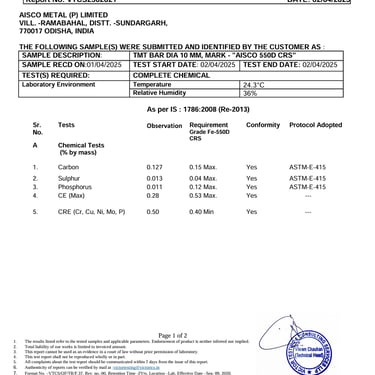
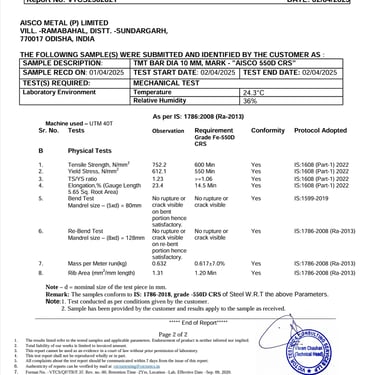
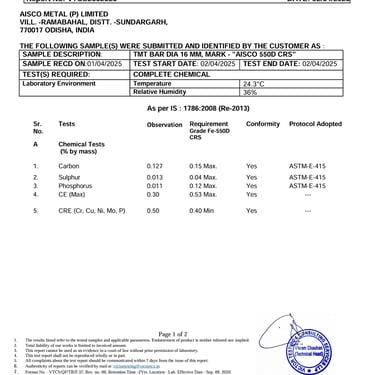
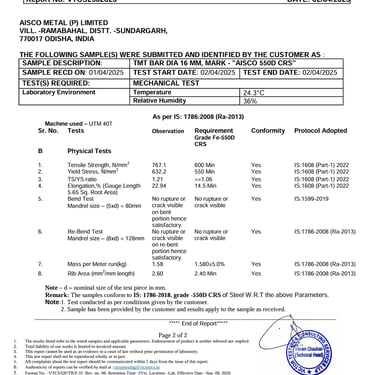
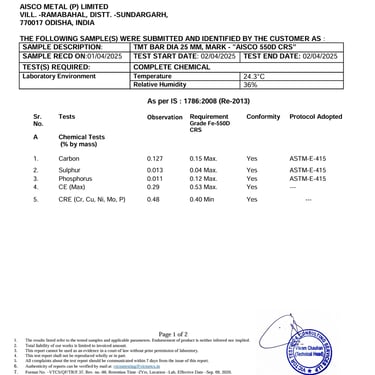
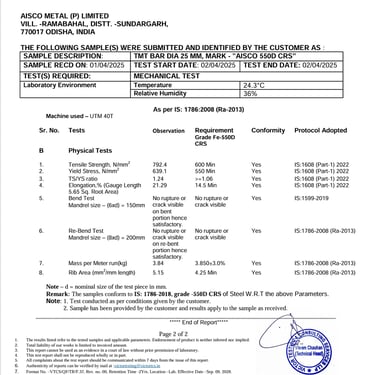


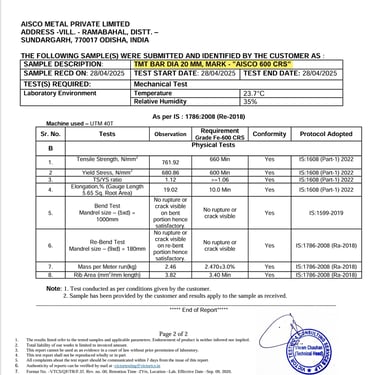
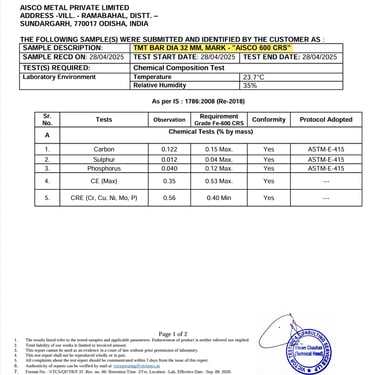
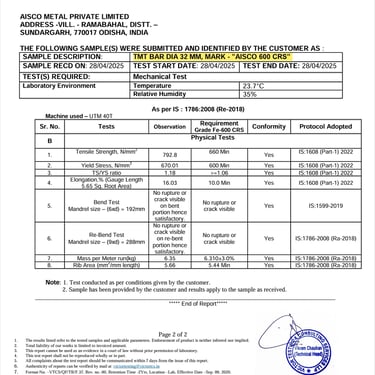
NABL- Certified Test Reports


World’s leading Testing, Inspection and Certification company
Choose our corrosion resistant rebar to enhance the lifespan and reliability of your construction structures.
Our rebar ensures longevity and strength, ideal for various construction projects requiring superior performance.
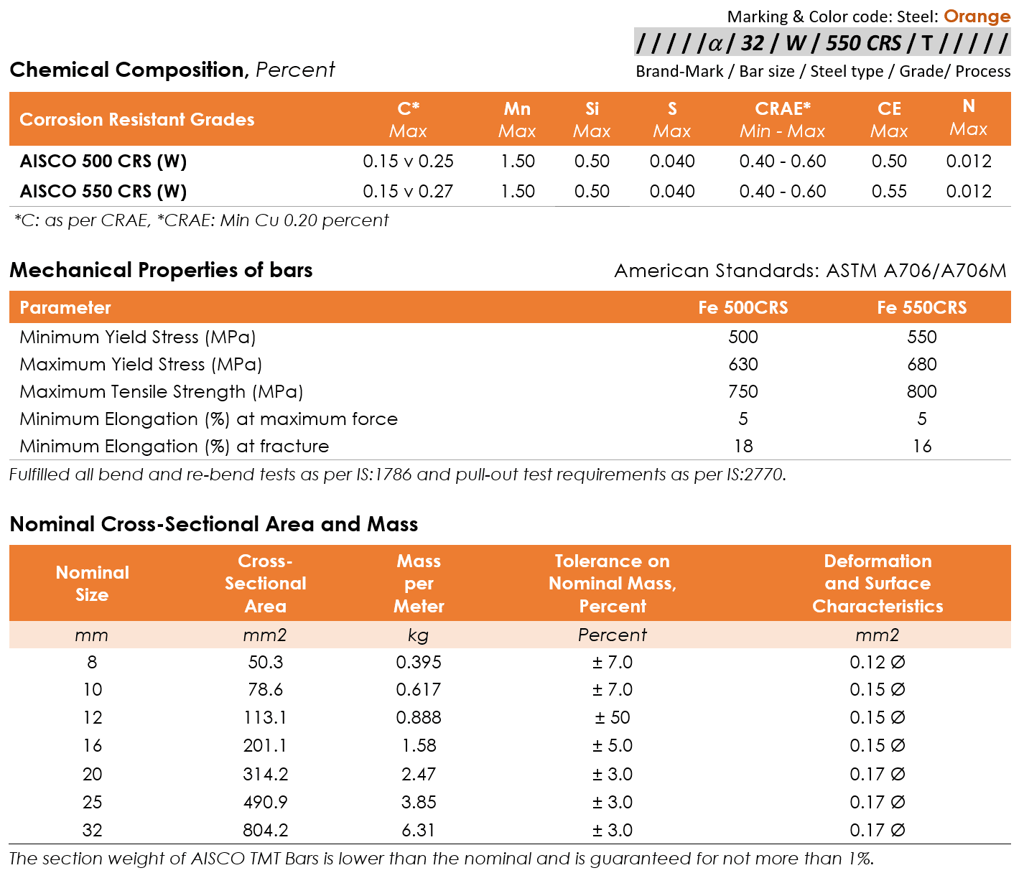
AISCO 550D CRS REBAR
AISCO 600 CRS REBAR
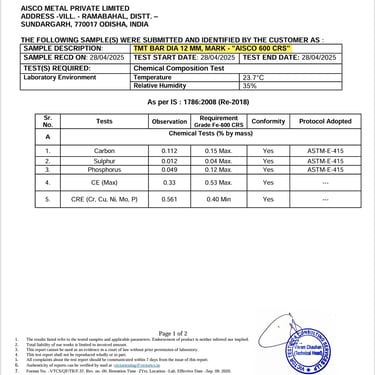
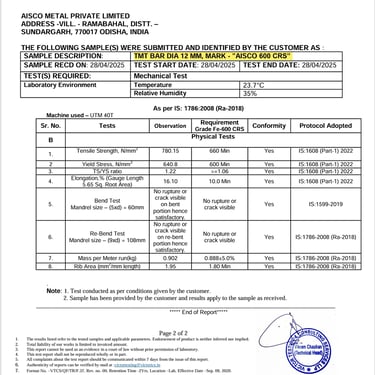
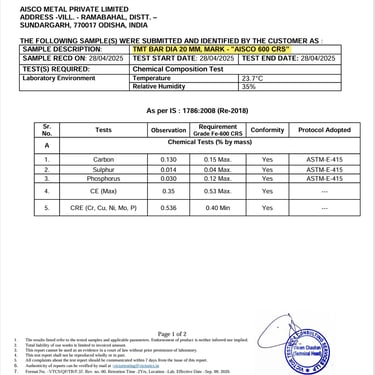
Marking on Low Alloy Steel Rebar & Color code: Orange
Brand-Logo / Bar size / Steel type / Grade


© 2006 AISCO Group. All Rights Reserved.
Integrated Steel & Total Rebar Engineering Solutions
Subscribe to our newsletter